Beautiful categories
Sort life into meaningful threads — Places, People, Recipes, Books. Everything organized, everything easy to find again.
Turn everyday thoughts into a beautiful record of your life. A few quiet minutes a day, gentle prompts, and a calm place to remember what mattered.
No credit card required · Free forever plan available
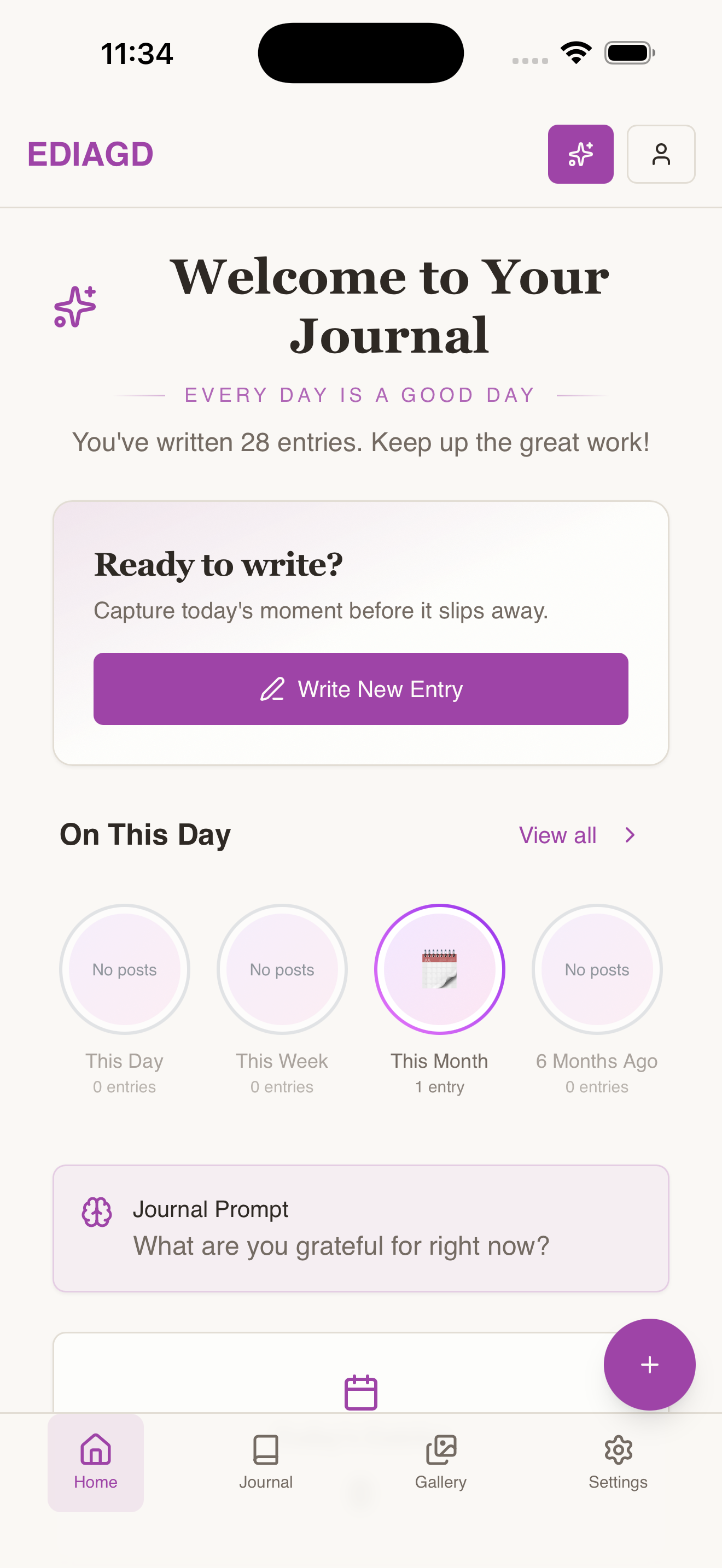
Thoughtful tools that make journaling effortless — so the writing stays, and the habit sticks.
Sort life into meaningful threads — Places, People, Recipes, Books. Everything organized, everything easy to find again.
Watch streaks grow and entries add up. Gentle progress that celebrates showing up — never guilt for missing a day.
Reflective prompts, rich media, autosaving drafts and a distraction-free editor. Add photos and dates, and just let it flow.
Designed with accessibility in mind — a supportive companion for reflection, memory, and the everyday habit of writing things down.
Many people find that writing regularly gives them room to process how they're feeling and build self-awareness through unhurried reflection.
Structured prompts give you a regular place to practise recall and attention — and leave you a record you can look back on.
Light and dark themes, high-contrast modes, left- or right-handed layouts and intuitive navigation make journaling reachable for everyone.
Gentle reminders and progress tracking help establish a daily writing habit that sticks over the long term.
"Research suggests that regular journaling can enhance overall wellbeing, strengthen focus, and support personal development."
Start free and upgrade whenever you're ready for an ad-free space with everything unlocked.
Perfect for getting started with a daily journaling habit.
An ad-free space with everything unlocked and personalized.
Cancel anytime · 7-day free trial
A tailored partnership for healthcare organizations and the patients they serve.
Scoped with your team on request
Why physicians, neuropsychologists and rehabilitation specialists recommend journaling — especially for people navigating memory loss, stroke recovery and cognitive challenges.
Emotional upheavals touch every part of our lives. These things affect all aspects of who we are — our financial situation, our relationships with others, our views of ourselves — and writing helps us focus and organize the experience.
When writing by hand, you use your body and senses to a larger extent than when typing. The letters you draw on paper need to be precisely formed, which requires hand-eye coordination and fine motor skills. All that is great stimulation for the brain — beneficial for learning and memory.
Mental activity — particularly what researchers call 'literacy activities' like writing in a journal — is protective of cognitive health in older adults. The old saying, 'use it or lose it,' holds true not just for physical exercise, but also for mental exercise.
Everything you need to know before you start journaling.
Begin your journaling journey today and discover how a few reflective minutes can transform your daily life.
No credit card required · Free forever plan available